How much glucose should you take for hypoglycemia?
In cases of mild hypoglycemia, it is common to 10–20 g of readily available carbohydrates called. After about 15 minutes Blood sugar levels are usually checked again. Individual recommendations should be made in consultation with a doctor.
Why the number of grams matters
In the case of acute hypoglycemia, it’s not just a matter of eating “something sweet,” but rather a a clearly defined amount of readily available carbohydrates to record.
It is important to note that:
- to know the weight per serving
- to be able to deliver the material precisely
- Avoiding overcorrections
Inaccurate dosing can lead to significant fluctuations in levels.
10–20 g – what does that actually mean?
The recommended amount refers to the carbohydrates contained in the food, not to its total weight.
The key point is:
- How many grams of carbohydrates are contained per serving
- How many units are needed
What to Do in Case of Mild Hypoglycemia
- Consume 10–20 g of readily available carbohydrates
- Wait about 15 minutes
- Check your blood sugar again
- Feed again if necessary
This structured approach is often described.
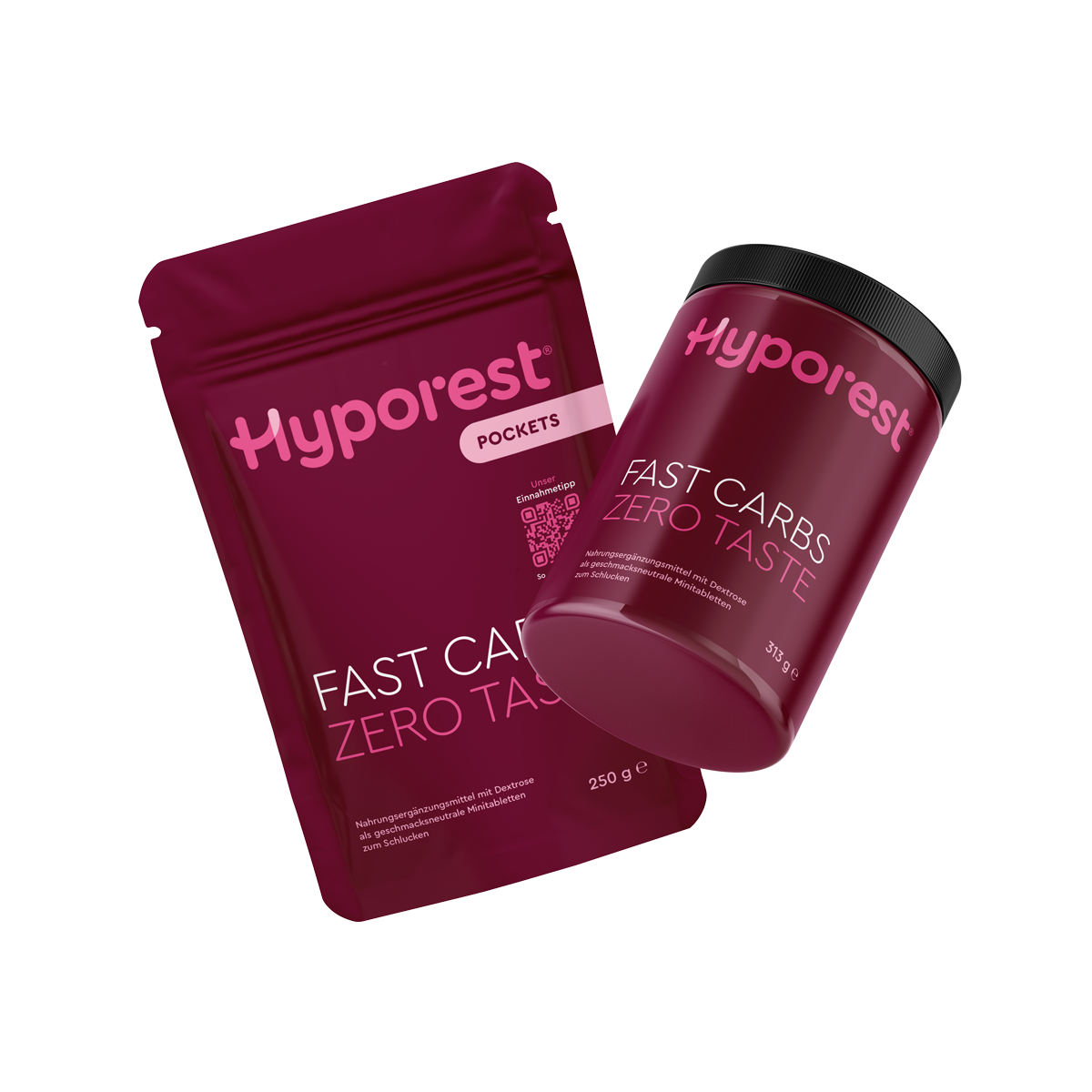
If Hyporest is used
Hyporest contains 200 mg (0.2 g) of glucose per mini-tablet.
A measuring spoon holds 25 mini tablets = 5 g glucose (≈ 0.5 carbohydrate units).
For reference regarding the frequently cited range:
- 2 measuring spoons = 10 g
- 3 measuring spoons = 15 g
- 4 measuring spoons = 20 g
This makes it easy to calculate the specified amount in grams.
Difference between glucose and other types of sugar
Glucose is a simple sugar. Other types of sugar may differ in composition and processing.
In cases of acute hypoglycemia, the focus is often on quickly available carbohydrates.
In connection with general measures for hypoglycemia
The basic steps are the same as those for other cases of hypoglycemia.
Read more in the article:
Frequently Asked Questions
Is 10 g enough?
The amount needed may vary from person to person. A range of 10–20 g is often cited.
Do you always have to use 20 g?
Not necessarily. The recommendation depends on the individual situation.
What happens when there is too much glucose?
Using too much can cause the levels to rise sharply. That is why it is important to know the exact amount.
Note: This text is for general information purposes only and is not a substitute for individual medical advice.