What happens when professional expertise, lived experience and strategic health communication come together in one person? Niki Kourtidou combines all of this – as a diabetes consultant DDG, coach and health communicator. She has been living with type 1 diabetes herself for 30 years and is not only familiar with guidelines and technologies, but also the quiet, often invisible sides of everyday life with diabetes.
In our conversation, she talks to us about attitude over method, about trust instead of just imparting knowledge, about the psychosocial dimension of technology - and about why real innovation must always start with people. An interview about changing perspectives, relationship skills and the question of what makes care truly human.
Niki, before we go into depth – who are you, in a few words?
Niki: „I am Niki – Diabetes Consultant DDG and Nutrition and Wellness Coach, trained by Harvard Medical School Executive Education. And a person with type 1 diabetes for 30 years. This is not a side note. That's the core of it all. I know both sides of the table. How it feels when the values aren't right - and how it feels when no one asks why. I am an insider. Not because I say so. But because I live it."
Niki, you say: “I am not my values.” What motivated you personally and professionally to think about diabetes counseling not just in a medical way, but in a deeply human way?
Niki: „Because that's exactly what I've been missing for years. Someone who sees more than my values. Behind blood glucose levels and AGPs are feelings, difficult days, parties, work, exercise - just life. No algorithm shows this. No laboratory findings either. And that's exactly why I do this work: so that people in the sugar arena know - there's someone who really understands what they're talking about."
You describe your work as “translation work” between guidelines and the reality of life. Was there a specific moment in your career when you realized that numbers alone don't reach people?
Niki: „Not one. Hundreds. People with dangerously low levels who felt no danger. People who have treated elevated values such as hypoglycemia - because blood sugar perception is so individual. Numbers don't lie. But they never tell the whole story. The truth behind it? You have to ask for them. With open ears. And above all – with an open heart."
You combine the roles of diabetes consultant DDG, coach and strategic health communicator. How do these perspectives intertwine in your everyday life – in the hospital, in training courses or in coaching?
Niki: „For me it's not three roles. It's a look. In the hospital: What medical needs does this person need? In coaching: What prevents you from actually living it? As a communicator: How do I say it in a way that resonates with her - in her language, in her reality? Holding these three levels at the same time – that is my core craft. And honestly, I couldn't leave any of them out."
With “GlukoseGuru” and “The Permanent Shift” you have shaped a very independent approach. What was your original vision behind this project – and what does it stand for today?
Niki: „GlucoseGuru was my first online project. Advice, coaching, different modules relating to diabetes and everyday life. The beginning of something. This became my new “baby”: The Permanent Shift. A concept for women who want to find peace with their bodies. Glycemic health and mental health – together. Because I learned: One without the other doesn't work."
Who is The Permanent Shift for – and what makes it different from other healthcare offerings?
Niki: „For women who have tried everything. Every plan, every program, every method. And they still end up in the same pattern over and over again. Not because they don't have enough discipline. But because knowledge alone does not create change. Regulation does. I work at the intersection of blood sugar stability, nervous system regulation and behavioral patterns – because real, lasting change requires all three. And I bring something that no textbook can replace: 30 years of lived experience as a person with type 1 diabetes. My goal is not to give women another plan to follow perfectly. My goal is to help you become the woman who doesn't need anyone anymore."
You openly criticize terms like “non-compliant” or “therapy failure”. What do you think this attitude does to people with diabetes?
Niki: „Of course there are people who show little adherence. But wait – do we really understand what diabetes mellitus means? This is not a disease that can be cured with a pill every day. Hundreds of decisions every day. Stress. Hormones. Sleep. Life. People with diabetes should want to take part on their own initiative and follow us. Perhaps we need to first ask: Are we even communicating effectively? Anyone who feels truly heard is open. Anyone who feels judged retreats."
In one of your posts you write: “Behavior changes not through knowledge, but through trust.” What does this mean specifically for advice and training?
Niki: „Knowledge is not the missing piece. I experienced that myself. I had the knowledge – and still used food as a coping strategy. What is missing is security. As long as someone is afraid of giving the wrong answer – their brain is in survival mode. Not in learning mode. Specifically, this means: first the relationship, then the information. First ask, then explain. First understand where someone stands - then accompany them wherever they want to go."
Especially with type 2 diabetes, you talk a lot about emotional regulation, stress and adaptation patterns. What dynamics do you observe again and again in everyday life - even beyond nutrition and exercise?
Niki: „People who have functioned throughout their lives. Who say yes when they mean no. Avoid conflicts. Get in line. Wear a lot – and talk about it little. This chronic internal stress ends up somewhere. Often on the plate. Eating becomes the only break allowed. To calm down. For reward. This is not a problem of will. This is a survival pattern. And before we talk about diet plans, perhaps we should ask: What emotion are you trying to manage right now?"
You compared diabetes technology to a Ferrari: impressive – but only effective if you can drive it. Where do you currently see the biggest discrepancy between technical innovation and human reality?
Niki: „The technology is really impressive. CGM, AID systems, smart pumps. But I always experience the same thing: the person gets the device. A technical briefing. And then he is alone. With his expectations, his fears, his questions in the middle of the night. The biggest gap is not technology. It's the lack of human companionship afterwards. What good is the best Ferrari if someone has never had driving lessons? And ashamed to admit it?"
In your pump article you emphasize that AID systems are only one pillar. In your opinion, what factors actually determine whether pump therapy works in everyday life?
Niki: „Comprehensive information – that anyway. But just as important: we have to signal that uncertainty is allowed. What do I do with my pump while exercising? On long-distance travel? These questions come. And people need to know: We are here. Really there. Not just when it comes to hiring. Another factor is willingness to grow with the pump. To learn. To be gentle and honest with yourself. That sounds easy. It's not."
In your experience, what is often underestimated in educational discussions about insulin pumps - especially on a psychosocial level?
Niki: „Almost everything that comes after the first impression. The false alarms at night. The feeling of wearing a device on your body. The reactions from the social environment. The disappointment when things don't get better immediately. I often hear: “It was explained to me how it works – but not how it would make me feel.” That's the gap. Many people can explain technology. Preparing people emotionally – that’s the real work.”
You offer advice for couples and families. Why is diabetes never just an “individual diagnosis” but always a relationship issue?
Niki: „Because we don't live alone. Every decision in diabetes is based on the glucose level at that moment, the active insulin in the body, what comes next. This affects everything – including the people around us. What do I do with my pump during sex? How can my partner help with a hypo? These are not marginal topics. This is everyday life. Real everyday life. And that belongs in the consultation."
You are strongly committed to conscious language – for example “person with diabetes” instead of “diabetic”. Why are words in care more than just semantics?
Niki: „As a communicator, this is one of my favorite topics. Words shape how someone sees themselves. Just remember the difference between “cop” and “cop.” In Greece they say: “The tongue has no bone – but it can break bones.” The more consciously we use words, the more people we really reach. Especially people who already carry enough."
Despite modern technology, hypoglycemia remains a real burden. What do those affected most often describe to you when it comes to these situations - physically, but also mentally?
Niki: „Physical: shaking, sweating, racing heart, feeling of losing control. But what concerns me more – is the mental weight. The fear of the next hypo. The shame when it happens in public. The exhaustion from waking up in the night and checking before going back to sleep. Many people say: A hypo doesn't end when the blood sugar is back to normal. It lasts for hours. This is discussed far too rarely."
When you evaluate solutions for acute situations: What criteria must be met so that they work in real life - not just on paper?
Niki: „First: Always available. Without any effort. Second: No additional burden. If you have to think first in the middle of a hypo, you react too late. Thirdly – and this is most important to me: it has to fit the person. To the reality of life. About the situation. What sounds ideal on paper has to really work in life. This is the test. Not the theory."
You continually emphasize the importance of choice. Why do you think self-determination in everyday life is a central factor for acceptance?
Niki: „Because no one does what is forced on them permanently. Not from within. Acceptance occurs when someone feels: I have a choice here. I can have a say. This is not arbitrary. That is dignity. People who are allowed to vote carry their decisions differently. That's the difference between compliance and real acceptance of responsibility."
You described the exchange between the practice, patients and industry as a driver of innovation. For you, what distinguishes real dialogue from pure marketing?
Niki: „Real dialogue begins with listening. Before anything is presented. If industry really wants to understand: What is missing? What's not working? Where does the shoe pinch? – then something real is created. Marketing starts with a finished message and then seeks validation. People notice that immediately. I enjoy working with companies that have the courage to ask real questions - and endure real answers."
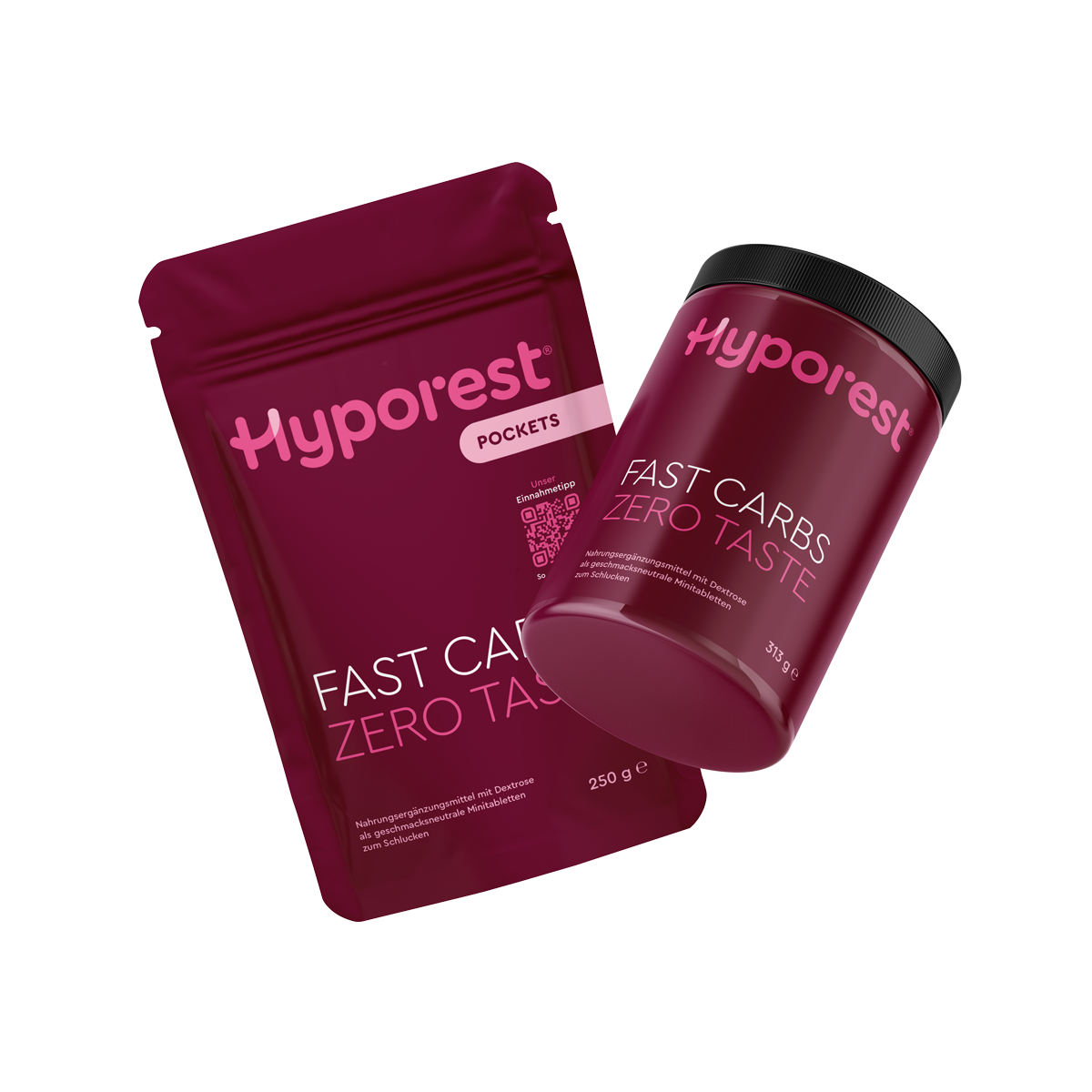
You described Hyporest as an “exciting new approach”. What do you find interesting about it from a professional perspective - especially with regard to everyday suitability and communication?
Niki: „I get the impression: Someone here really understood hypoglycemia. Previously: Artificial taste. Binge sugar cravings. Products that solve the problem – but create new ones. Hyporest thinks differently. The perspective shifts from “taste” to “effectiveness” – and especially to “health”. Just think of glucose and dental health. That's not a detail. This is a real paradigm shift."
What role does a flavorless option play in the context of nocturnal hypoglycemia or in people who have developed “sweet fatigue”?
Niki: „A neutral taste can be liberating. Really liberating. Sure - if you haven't experienced many hypos, you might want something sweet right then. This is how it was trained. But someone who experiences this regularly? He finds taste-neutrality as a solution from heaven. Simply bring the sugar back into the normal range. Without any strange taste. Without binge eating. No regrets afterwards."
How does your community react when you present new solutions - and what is important to you before you recommend something?
Niki: „I don't recommend anything that I don't fully support. With my name. My experience. My belief. That was exactly the case with Hyporest: I tried it out myself, asked questions, checked it. Only then did I talk about it. My community is direct – I value that. She notices immediately whether something is authentic. The reaction is usually: skeptical at first. Then curious. Then convinced."
What advice would you give to colleagues in healthcare who would like to make their advice more relationship-oriented?
Niki: „Start with yourself. Really. Relationship-oriented work is not a technique – it is an inner attitude. This means reflection work. Don't just look at the values and move on. But pause. Questions: How would I feel at this point? What does this person need right now? What does she carry with her that I don't yet see? Conversation techniques, questioning techniques and a different perspective develop from this attitude. Away from pure information. Towards real dialogue. Relationship-oriented counseling is not a soft skill. She is the foundation."
If you could wish for diabetes care in five years: What should have fundamentally changed in thinking - not just in technology?
Niki: „That we stop treating diabetes as a discipline problem. That psychosocial support is just as obvious as an HbA1c value. That “non-compliant” disappears from our vocabulary – not as a gesture. But because we really understood it. And that people with diabetes are seen as experts in their own lives. First the human being. Then his diabetes. Never the other way around."
And on a very personal level: What keeps you motivated for your work – despite structural deficits and increasing numbers?
Niki: „The people. Always the people. The moment when someone says, “I’ve never thought of it that way.” Or simply – take a deep breath. Relaxed. These moments aren't major breakthroughs on paper. But they change lives. And they remind me why I do all this. Not for the system. For the person sitting across from me. Whether through the right blood sugar setting – or through the right words. Both count. Both changed."
You described Hyporest as “perhaps a game changer.” What do you particularly appreciate about this approach?
Niki: „The taste-neutral approach. And that you are spared from binge eating. The sweetness is missing – deliberately. The product is solution-oriented, no frills. This is exactly what people who live with hypoglycemia need every day."
How would you describe Hyporest in two to three sentences from the perspective of your practical experience?
Niki: „Hyporest is an effective product for hypoglycemia management - gentle on teeth, without unnecessary carbohydrates, and without artificial taste. It reliably brings blood sugar into the normal range. For me, it's an example of what innovation looks like when it really comes from the everyday lives of those affected - and not from the laboratory."
Why do you think an early, transparent dialogue between industry and healthcare practice is crucial for real innovation?
Niki: „Because we see in practice what really happens. The challenges in real everyday life with diabetes - not in the study design. If we find the courage to pass these findings directly onto the industry, products like Hyporest will emerge. Early. Transparent. Together. That's the only way to achieve innovations that actually work in real life."
We would like to thank you very much for the conversation and the deep insights into your work and your mindset, Niki!
Conclusion
This conversation makes it clear: progress in diabetology does not only come from new systems, sensors or products. It arises from a changed attitude. Through language that strengthens rather than stigmatizes. Through support that creates security. And through solutions that work in real life – not just on paper.
Niki Kourtidou represents this change of perspective: first the person, then the method. First relationship, then information. When care, practice and industry take the dialogue seriously and think from the everyday lives of those affected, innovation with substance is created. This is exactly where sustainable change begins.
Experience here more about Hyporest.