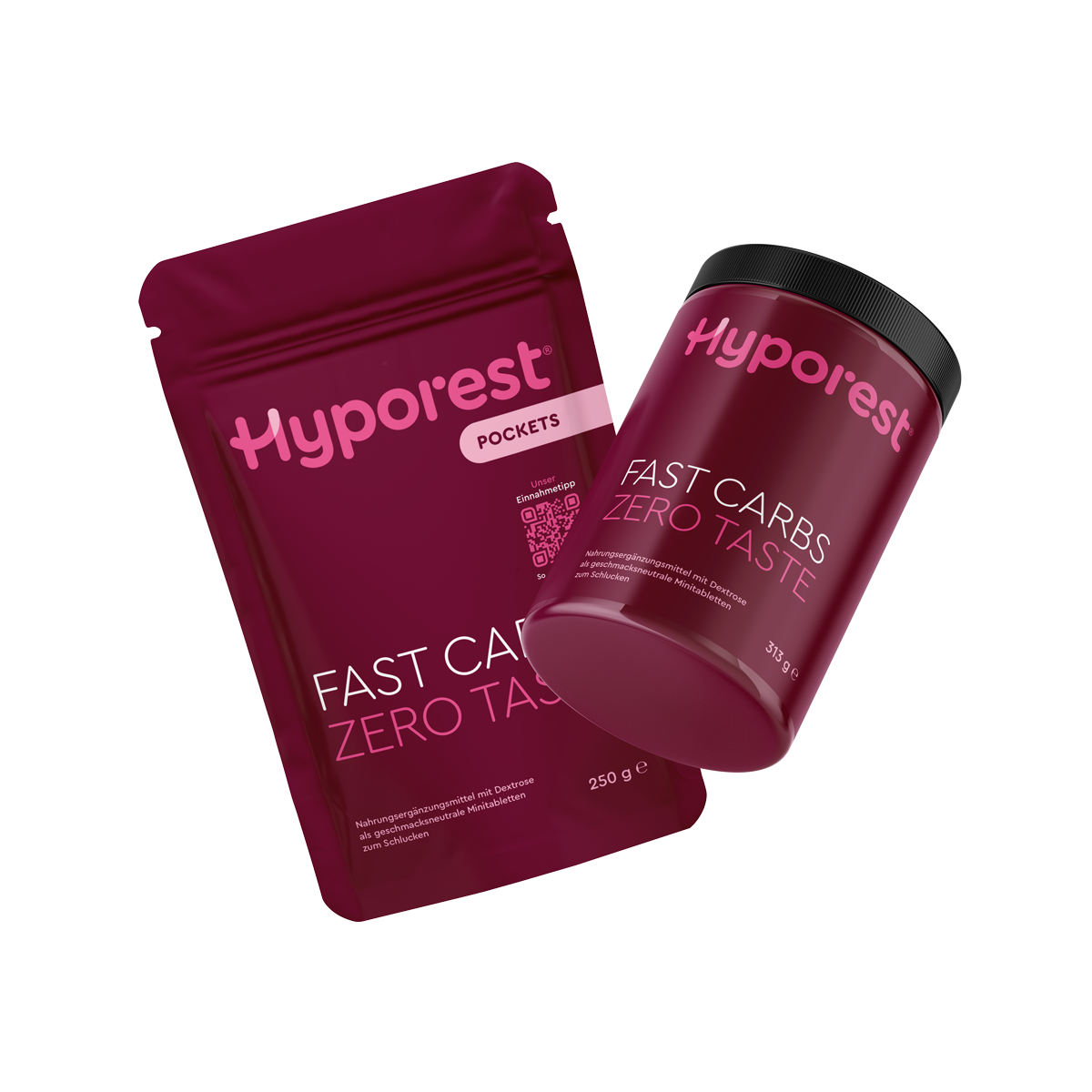
One hypoglycaemia (medical: Hypoglycemia) refers to a condition in which blood sugar levels fall below the normal range. Since glucose is the brain's most important source of energy, the body reacts particularly sensitively to falling levels. Hypoglycemia can therefore become noticeable very suddenly and intensely.
The topic is particularly relevant for people with diabetes, especially those on insulin-dependent therapy. But athletes, people with irregular diets or longer periods of fasting can also be affected. As a medical guideline: Hypoglycaemia is usually referred to as values below 70 mg/dl (3.9 mmol/l).
What helps quickly against hypoglycemia?
In the case of acute hypoglycemia, one thing matters most: How quickly does sugar get into the blood? It is not the glycemic index (GI) that is important, but the speed of absorption. Liquid or already dissolved fast-acting carbohydrates are absorbed more quickly than solid, starchy foods (ADA).
Fast-acting carbohydrates in acute hypoglycemia (selection)
| rank | Food | Why suitable |
|---|---|---|
| 1 | Dextrose/glucose | Pure glucose, no digestion required, very quick absorption |
| 2 | Glucose gel/tablets | Liquid or quickly soluble, very rapid absorption |
| 3 | Regular lemonade | Liquid sugar, quickly available |
| 4 | fruit juice | Liquid, glucose and fructose |
| 5 | honey | High proportion of simple sugars |
In the case of acute hypoglycemia, it is not the GI that counts, but rather how quickly sugar reaches the blood. The symptoms arise from a lack of energy in the brain and the release of stress hormones such as adrenaline. If warning signals are ignored, this can lead to serious consequences. You can find a comprehensive classification of biochemical processes in our section Dextrose knowledge.
Can you have hypoglycemia without having diabetes?
Yes. Hypoglycaemia also occurs in people without diabetes. Possible causes include long breaks from eating, intense physical exertion or alcohol consumption. This form is often referred to as reactive hypoglycemia.
What to do if blood sugar is too low?
If you have mild hypoglycemia, you should take fast-acting carbohydrates. Blood sugar should be measured again after about 15 minutes. After stabilization, it is advisable to eat slow-acting carbohydrates to avoid another drop. We explain below why conventional solutions are often perceived as too sweet Why hyporest.
Scientific background
Blood sugar is regulated by a finely tuned hormonal system: insulin lowers blood sugar, while glucagon, adrenaline and cortisol increase it or mobilize energy reserves. In the case of hypoglycemia, this counter-regulation is not sufficient. In special situations, such as when a... Hypoglycaemia at night occurs, acting quickly is particularly important.
Conclusion
Hypoglycemia is a serious but easily controllable condition. Anyone who knows the symptoms and reacts quickly can safely manage hypoglycemia in everyday life. Precise dosage helps to reach the target area again without unnecessary peaks.
Medical notice:
This article is intended to provide general information and is not a substitute for medical advice. If you have recurring or severe hypoglycemia, you should seek medical advice.
Sources
- American Diabetes Association (2024): Standards of Care in Diabetes - Hypoglycemia
- International Hypoglycaemia Study Group (2017): Glucose concentrations < 3.0 mmol/L
- Mayo Clinic: Hypoglycemia - Symptoms and Causes
- Cleveland Clinic: Hypoglycemia (Low Blood Sugar)
Editorial note:
This article has been carefully researched and is intended to provide general information. It does not constitute medical advice and does not replace a medical diagnosis, individual treatment or therapy. The content is created, checked and updated by the Hyporest editorial team.