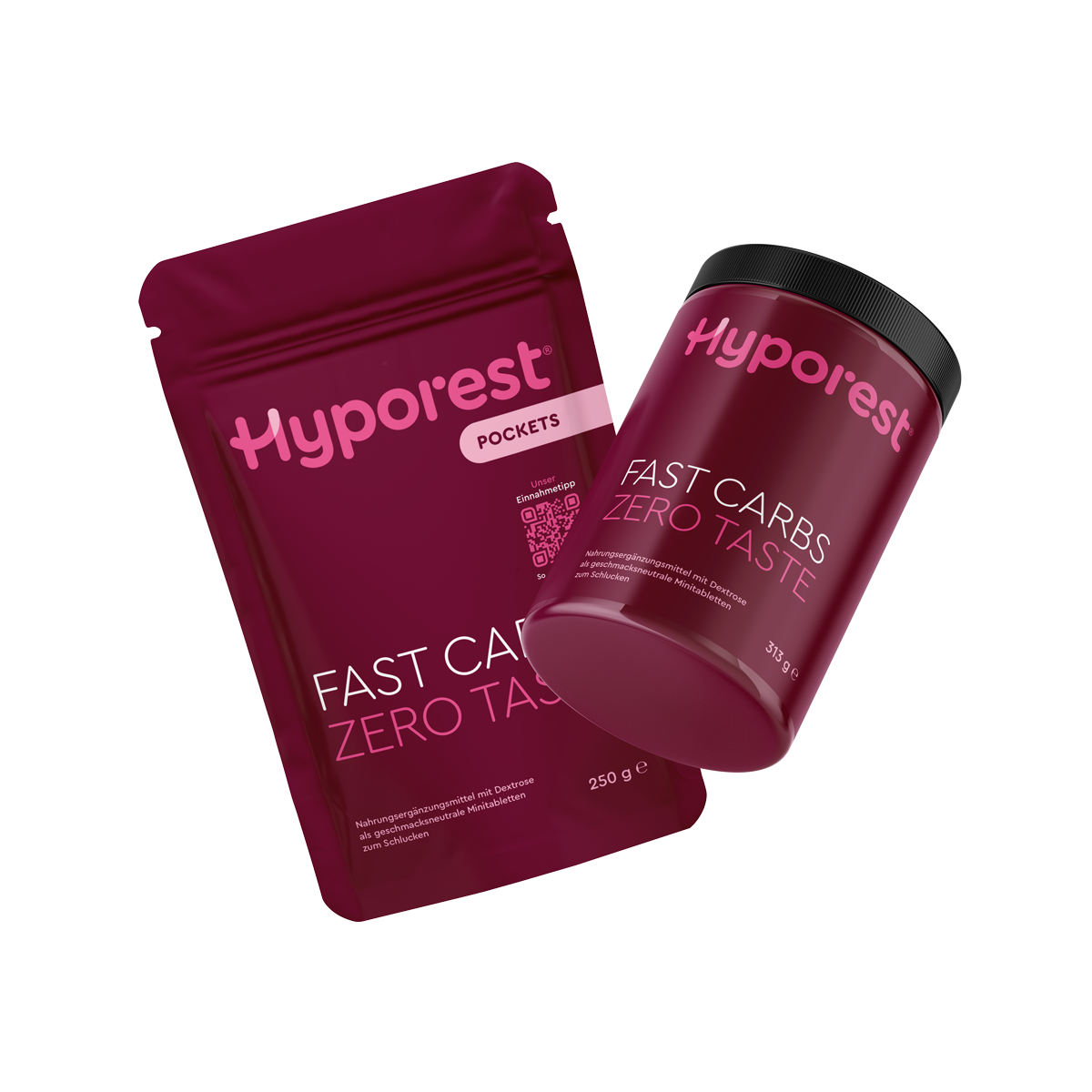
The 15-15 rule is the worldwide recommended immediate measure for mild to moderate hypoglycemia. It says: take 15 grams of quickly available carbohydrates, wait 15 minutes, measure blood sugar and repeat if necessary. In this way, blood sugar is raised safely and in a controlled manner without overshooting too much.
This is how the 15-15 rule is applied
- 15-20g fast carbohydrates consume immediately (e.g. dextrose, glucose gel or juice).
- Wait 15 minuteswithout taking in any more carbohydrates.
- Measure blood sugar.
- If the values are still below 70 mg/dl, repeat the rule.
- Once blood sugar is above 70 mg/dL, eat a meal or snack containing slow carbohydrates to keep the level stable.
Practical quantities for 15 g of dextrose
| product | Amount for approx. 15 g of dextrose |
|---|---|
| Coated mini-tablets (200 mg) | 75 tablets |
| Dextrose powder | 15 g (approx. 3 level teaspoons) |
| Classic glucose tablets | 3-4 tablets |
| Glucose gel | 1 tube (usually 15-20 g) |
When the rule does not apply or only applies to a limited extent
- In case of severe hypoglycemia with impaired consciousness (then glucagon or emergency doctor)
- If ketoacidosis is suspected
- For very low values (< 50 mg/dl) – 20–30 g is often recommended here
Tips for everyday life
- Always have fast-acting carbohydrates at hand (e.g. Hyporest Pockets)
- After the acute phase, plan a meal with complex carbohydrates
- If necessary, increase the amount slightly when exercising or at night
Further information:
→ Diabetes mellitus – knowledge and overview
→ Why hyporest
→ Hypoglycemia
Sources
- German Diabetes Society (DDG). S3 guideline “Hypoglycemia”. As of 2025. Available at: www.deutsche-diabetes-gesellschaft.de/leitlinien.
- American Diabetes Association. Standards of Medical Care in Diabetes—2026. Diabetes Care. 2026;49(Suppl 1). Available at: diabetesjournals.org.
- Robert Koch Institute (RKI). Federal health reporting – diabetes mellitus in Germany. Berlin 2024.
- International Diabetes Federation (IDF). IDF Diabetes Atlas. 11th edition. Brussels 2025. Available at: diabetesatlas.org.
Important note:
The information in this encyclopedia article is intended solely for general and non-binding information. They do not replace medical advice, diagnosis or therapy. If you have any health questions or complaints, please always consult a doctor or qualified healthcare professional. The content was created with the greatest possible care, but errors cannot be completely ruled out.
Last updated: February 26, 2026