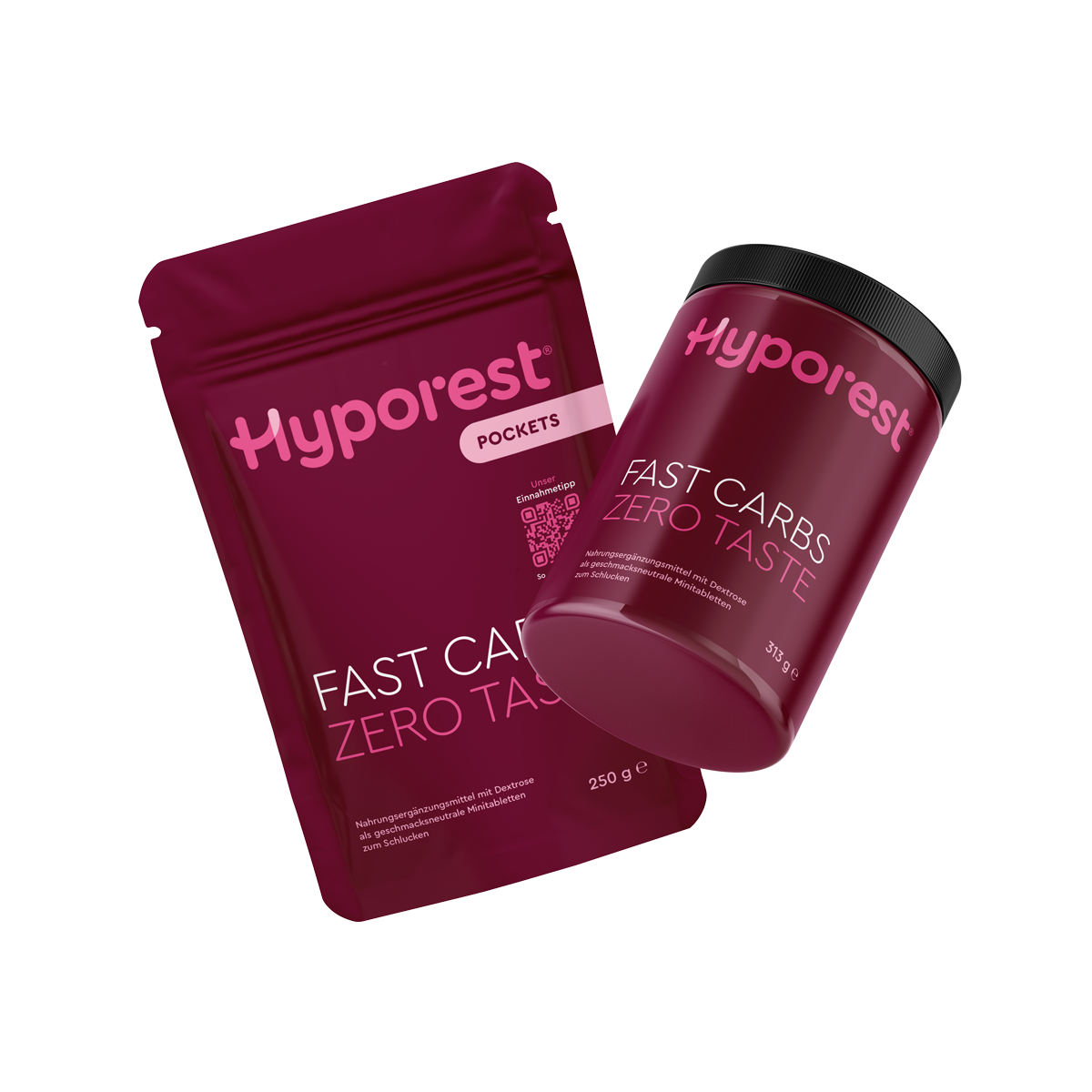
dextrose and glucose chemically refer to the same simple sugar (monosaccharide) with the molecular formula C₆H₁₂O₆. The difference between dextrose and glucose lies not in the structure, but solely in the use of the terms in industry, commerce and science.
Is dextrose the same as glucose?
Yes. Dextrose is the commercial name for D-glucose. The term is predominantly used in medicine and biochemistry Glucose used, while often used in ingredient lists or in the grocery store Dextrose or dextrose is spoken.
Definition of terms in comparison
| feature | Dextrose | Glucose |
|---|---|---|
| Designation | Commercial and ingredient term | Medical-scientific term |
| Etymology | Refers to D-glucose (optically clockwise) | Standard biochemical term |
| Context | Food industry, sports nutrition | Blood sugar measurement, laboratory, specialist literature |
| Structure | Identical C₆H₁₂O₆ | Identical C₆H₁₂O₆ |
Physiological classification
Since both terms describe the same molecule, the biological effect is also identical:
- Energy source: Glucose serves as an essential energy source in metabolism.
- Absorption: Absorption via the small intestine without prior enzymatic cleavage.
- Storage: Conversion into Glycogen in liver and muscles.
- Measurand: Blood glucose meters record the concentration of glucose – i.e. dextrose – in the blood.
Summary: Difference between dextrose and glucose
- Chemical: No difference – both terms refer to D-glucose.
- Linguistically: Dextrose = commercial term, glucose = technical term.
- Metabolism: Identical utilization in the human organism.
Further topics
Note: This article is for general information and does not replace medical advice. If you have individual health questions, please contact a medical professional.