Fast-acting carbohydrates for hypoglycemia – which ones are suitable?
Hypoglycemia often causes 10–20 g of readily available carbohydrates ... A clearly defined set and ease of use are key.
Not all foods have the same effect—differences arise from their composition and dosing.
What are fast-acting carbohydrates?
Fast-acting carbohydrates are types of sugar that the body can use quickly. These include, in particular, Glucose (grape sugar, Glucose).
Hypoglycemia is often associated with a clearly measurable number of grams in the foreground.
Examples of readily available sources of carbohydrates
Typical options:
- Glucose tablets
- Carbohydrate gels
- Fruit juice with a known carbohydrate content
- Liquid sugar
What matters is not the shape, but the number of grams per serving.
Difference from snacks containing fat or protein
Foods containing added fat or protein may differ in how quickly they are absorbed.
In cases of acute hypoglycemia, the following are often present simple carbohydrates in clearly defined amounts in the foreground.
What is the most commonly cited amount?
In cases of mild hypoglycemia, it is common to 10–20 g of readily available carbohydrates called.
The value is usually checked again after about 15 minutes.
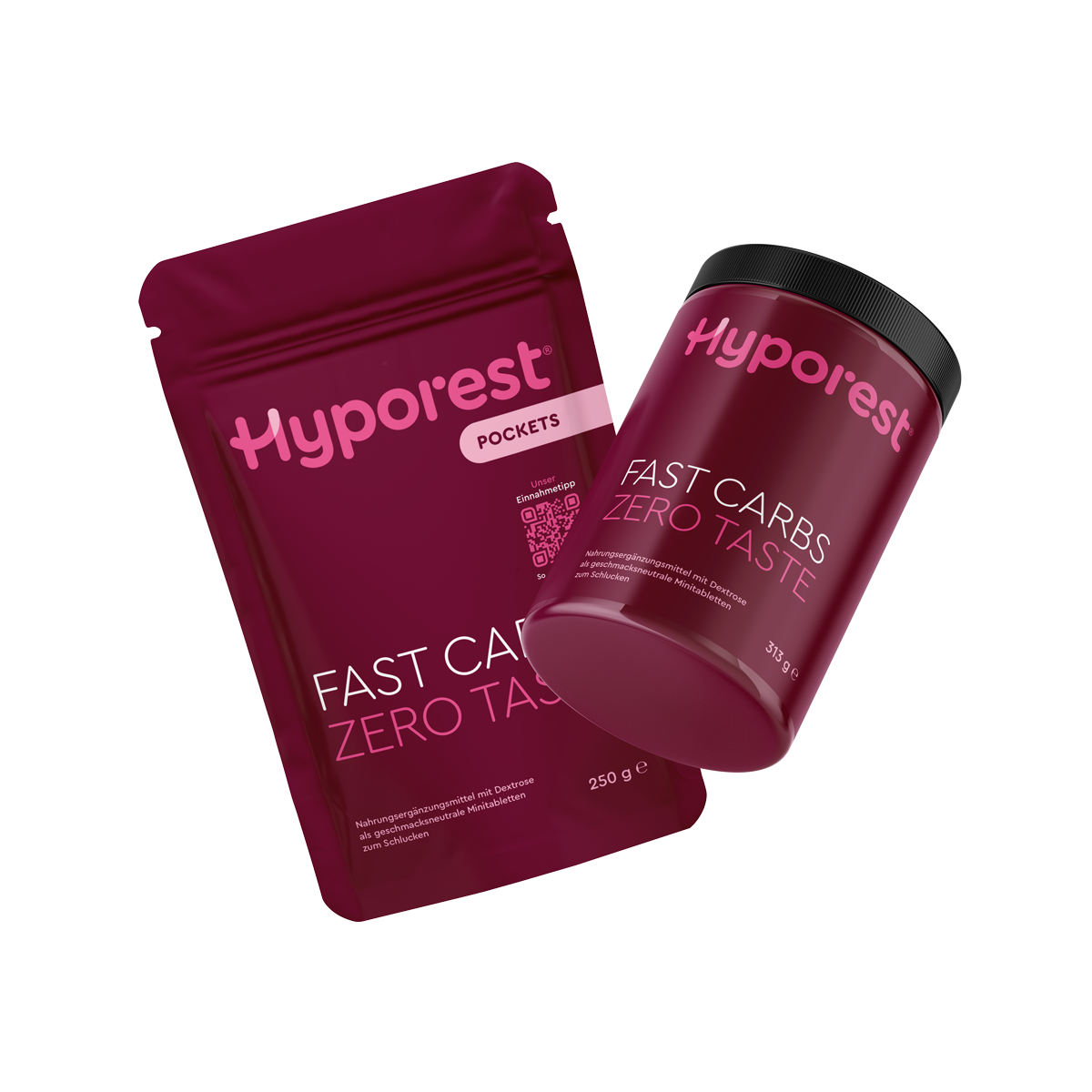
If Hyporest is used
Hyporest contains 200 mg (0.2 g) of glucose per mini-tablet.
One measuring spoon equals 5 g glucose (≈ 0.5 carbohydrate units).
For your reference:
- 2 measuring spoons = 10 g
- 3 measuring spoons = 15 g
- 4 measuring spoons = 20 g
This allows you to calculate the commonly cited weight range.
Connection to other hypoglycemic episodes
You can find more information about general measures here:
Read more in the article:
Frequently Asked Questions
Which fast-acting carbohydrates help with hypoglycemia?
In connection with hypoglycemia, the following are often 10–20 g of readily available carbohydrates called. These include, in particular, Glucose (grape sugar) or beverages with a clearly stated carbohydrate content.
Why aren't all "sweet" foods suitable?
It is not the sweet taste that matters, but rather the Composition. Foods with a higher fat content—such as chocolate—can slow down the absorption of carbohydrates. In acute situations, therefore, quickly available carbohydrates with negligible fat content are usually recommended.
Is 10 g enough, or do you need 20 g?
Guidelines often specify a range of 10–20 g called, often with about 15 g as a guideline. The amount needed may vary from person to person and should be adjusted accordingly.
Do I need to take another measurement after 15 minutes?
It is often recommended to check again after about 15 minutes in order to better assess the situation and adjust carbohydrate intake if necessary.
Is glucose absorbed faster than table sugar?
Glucose is a simple sugar. Table sugar consists of glucose and fructose. Glucose is often mentioned in connection with hypoglycemia because it is readily available. However, the key factor remains the known amount in grams.
Note: This text is for general information purposes only and is not a substitute for individual medical advice.